The Mitsubishi 4G63 isn’t just one of the greatest engines Mitsubishi ever built — it might be the greatest 4-cylinder engine of all time. In this episode of KONIG’s Engine Anatomy, we break down the legendary turbocharged powerhouse that helped define an entire generation of performance cars.
From dominating the World Rally Championship with Tommi Mäkinen and the Mitsubishi Lancer Evolution, to becoming a staple in drag racing, street builds, and high-horsepower projects around the world, the 4G63 earned its reputation through decades of proven performance.
In this episode, we cover:
The history and evolution of the 4G63
Why the engine became such a tuning icon
The engineering that made it so durable and powerful
Common weak points and limitations
Its rally heritage and WRC dominance
Why enthusiasts still respect the 4G63 today
Whether you’re an Evo fan, DSM enthusiast, rally fan, or just love legendary engines, this is one Engine Anatomy episode you don’t want to miss.
What do YOU think is the greatest 4-cylinder engine ever made?
Subscribe to our YouTube channel @konigwheels for more wheel tech, fitment advice, motorsports content, and behind-the-scenes discussions from KONIG Wheels.
In this episode, we break down the REAL differences between squared and staggered wheel setups — including handling characteristics, fitment considerations, tire rotation advantages, traction benefits, and which setup actually makes sense for YOUR build.
From daily drivers and street cars to track builds and high-horsepower applications, we explain:
What a squared setup is
What a staggered setup is
The pros and cons of each
Which cars benefit from staggered wheels
Why some enthusiasts prefer squared setups
Tire rotation & maintenance considerations
Handling balance, grip, and understeer characteristics
How wheel width affects performance and drivability
Whether you’re building a drift car, track car, show car, or just trying to choose the right wheel setup for your daily, this video will help you understand which direction makes the most sense before buying your next set of wheels.
Are you running squared or staggered on your car?
Subscribe to our YouTube channel @konigwheels for more wheel tech, fitment advice, motorsports content, and behind-the-scenes discussions from KONIG Wheels.
Before you buy your next set of wheels, make sure you aren’t making a mistake you might regret later. Depending on your usage, location, and personal taste, there are a few things that you need to know about Wheel Finishes.
In this episode of Behind the Wheel, we’re breaking down the real differences between Machined, Painted, and Powder Coated wheel finishes. Picking the right style is easy, but picking the wrong finish can mean chipped paint, ruined surfaces, and wasted money down the road.
What we cover:
The Big Three: The actual engineering differences between machined, painted, and powder-coated setups.
Durability: Which finish holds up best against brake dust, road debris, and daily driving?
Cost vs. Value: Is it worth paying a premium for a specific finish?
Maintenance: How to clean and protect each type to keep them looking fresh.
Don’t drop hard-earned cash on a new mod until you know exactly what you’re getting.
DROP YOUR FAVORITE WHEEL FINISH IN THE COMMENTS!
Subscribe to our YouTube channel @konigwheels for more wheel tech, fitment advice, motorsports content, and behind-the-scenes discussions from KONIG Wheels.
If concave looks so awesome… then why doesn’t EVERY car run them?
Deep concave wheels look incredible, but getting that aggressive look to actually fit your car takes more than just ordering the widest wheel possible. In this episode from KONIG Wheels, we break down the real factors that determine whether a concave wheel setup will work on your build.
From brake clearance and spoke design to wheel width, offset, and overall sizing, we explain why some cars can run ultra-concave wheels while others simply can’t. We also cover how wheel manufacturers design spokes around brake packages, and why choosing the wrong wheel specs can create fitment issues long before the wheel ever goes on the car.
Whether you’re building a street car, track car, or show car, understanding wheel concavity is essential before buying your next setup.
Topics Covered:
What makes a wheel “concave”
Brake clearance explained
Why spoke shape matters
Wheel width & offset considerations
Proper wheel sizing for your car
Common fitment mistakes enthusiasts make
Why aggressive fitment isn’t always possible
Subscribe to our YouTube channel @konigwheels for more wheel tech, fitment advice, motorsports content, and behind-the-scenes discussions from KONIG Wheels.
S2000 vs Miata — two of the most iconic driver’s cars ever made… but which one actually deserves the crown?
Welcome to SHOWDOWN, the series where we put legendary cars head-to-head and break down what REALLY matters to enthusiasts.
In this episode, we compare the Honda S2000 (AP1/AP2) and the Mazda Miata (NA/NB/ND) across the categories that define a true driver’s car:
Performance ⚡
Handling & steering feel 🏎️
Mod potential 🔧
Reliability & ownership 🛠️
Overall driving experience 🎯
The S2000 is known for its high-revving VTEC engine, razor-sharp chassis, and raw, analog feel.
The Miata? Lightweight, perfectly balanced, and arguably the purest expression of “slow car fast” ever made.
So… which one wins? Is the S2000 the ultimate precision weapon? Or does the Miata still reign as the king of driving fun? Watch to the end to see which car takes the win—and let us know in the comments which side you’re on.
📸: Bonsi Media, Harnett Media, Defined Lifestyle, KG Garage, TheTopher, Woyshnis Media, Tomasisk0
Subscribe to our YouTube channel @konigwheels for more Fitment Guides, Tech Breakdowns, and Behind-the-Scenes Content.
In this video, we break down the 5 key considerations that directly impact performance when choosing wheels for your track car. This isn’t about style or trends—this is about making informed decisions that affect grip, braking, handling, and overall consistency on track.
In this episode, we cover:
Construction Type – Understanding the real differences between cast, flow formed, and forged wheels—and where each makes sense
Wheel Weight – How reducing unsprung and rotational mass translates to real performance gains
Wheel Width – Why width matters more than most people think when it comes to tire performance
Proper Sizing – Choosing the right diameter and fitment for your application (not just what “fits”)
Brake Clearance & Airflow – The overlooked factor that can make or break your braking performance during hard sessions
If you’re building a dedicated track car or optimizing your current setup, these are the fundamentals you need to get right.
If you need additional help to determine proper fitment, email us at fitment@konigwheels.com
Subscribe to our YouTube channel @konigwheels for more episodes like this one!
In this episode of CARNATOMY, we break down Jeff Wasilko’s purpose-built NA Miata — a lightweight momentum monster designed to do one thing exceptionally well: make drivers faster.
Jeff is a race instructor, and this car is his classroom. Let’s take a walk around his NA Miata Build here from @LimeRockPark at @Gridlife Circuit Legends!
Under the hood sits a 2.4L Ecotec swap, delivering reliable, usable power in a perfectly balanced chassis. Supporting the drivetrain is a dialed-in suspension setup featuring Ohlins coilovers, tuned for maximum feedback and consistency lap after lap.
At each corner, the car rides on KONIG Hexaform wheels wrapped in sticky track-focused rubber — lightweight, strong, and built to handle abuse.
In this episode, we dive deep into:
The full engine bay and Ecotec swap details
Suspension geometry and Ohlins setup philosophy
Wheel and tire package selection
Aero choices that keep the car planted
A stripped, functional cockpit designed for focus and driver development
This NA Miata isn’t about dyno numbers or parking lot points. It’s about seat time, consistency, and chasing faster laps — whether you’re a student or an instructor.
Flow forming technology is one of the most advanced manufacturing technologies to enter the wheel industry. Flow Forming Technology involves the application of pressure to the inner barrel of the wheel, while spinning and after it has been casted. This process stretches and compresses the aluminum, which increases tensile strength. In this respect the process shares similar properties to those found in the forging process. The final product is lighter, stronger, has increased elongation, and a much greater shock resistance as well as the ability to increase load capacity over a traditional cast wheel (of the same design).
1: THE FLOW-FORMED PROCESS APPLIES PRESSURE ON THE INNER WHEEL WHILE SPINNING AFTER CASTING
2: THIS PROCESS STRETCHES AND COMPRESSES THE ALUMINUM, WHICH INCREASES TENSILE STRENGTH
3: THE FINAL PRODUCT IS LIGHTER, STRONGER, HAS INCREASED ELONGATION, AND GREATER SHOCK RESISTANCE
Interested in seeing more Flow Formed Wheels? Here is a link to all of the Konig Flow Formed Wheel offerings –> FLOW FORMED WHEELS
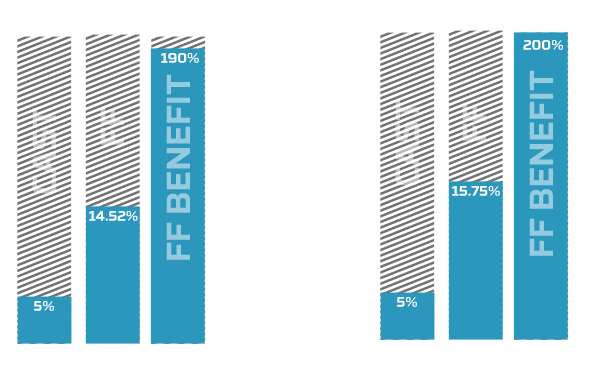
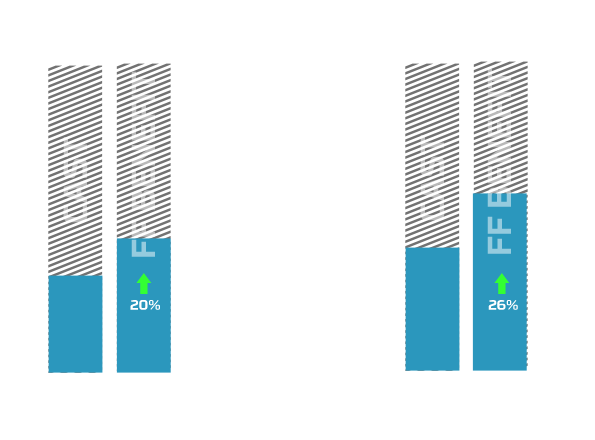
Flow Forming Technology has a great number of benefits. Konig has been producing Flow Formed wheels since 2010 and is always improving on the process and efficiency to improve the end product. Below are some visual charts for you to see the drastic benefits as it relates to elongation and tensile strength vs a regular cast wheel. The numbers used are approximate and only for general comparison. These are based off of wheels similar in styling, size, width and other specification. One wheel was a conventional cast constructed wheel and the other is developed using Flow Forming Technology.
TENSILE STRENGTH ELONGATION
What is Elongation?
Elongation is essentially the amount of flex that an object can have before it would reach a breaking point. So you might be asking why would it be more beneficial that a Flow Formed Wheel can flex more before it could ever reach that point? Well, its important when we talk about wheels that everyone should acknowledge that wheels are metal not magic.
While that may be a humorous line its incredibly true. We only build wheels to the highest quality. Konig places every wheel design through a very strict testing standard and build each design to load ratings which are in excess of what is needed for that design’s target vehicles. However, any wheel, regardless of whether it’s an aftermarket wheel or the original factory wheel, has a breaking point. Severe impact and the stress impacts over time can push the metal to a breaking point.
So let’s get back to the benefit that we started talking about earlier. If a wheel safely has the ability to flex more before ever reaching a breaking point that will increase reliability and longevity of a wheel. This is a benefit to racers on the track as well as the road hazards of everyday use on the street. .
If you have any questions, feel free to contact us!
Ok, so its winter and for the most part its still cold outside. But just because its cold outside doesn’t mean we can’t help you heat up your wall or desktop! The downloadable February calendar featuring the lovely Krystle Lina is up! Besides Krystle the Konig Milligram is also featured in the calendar. The Milligram is an MAT process wheel offered in 18×8.5, 18×9.5 and 18×10 in Gold and Matte Black.
Be sure to check out our blog regularly for every calendar month as well as other news and events. Additionally you may want to check out the Performance Auto Sound Magazine Facebook page as well as the Konig Wheels USA Facebook page





 ELONGATION